
Your Redevelopment Flat Came Out Smaller Than Promised. Where Do You Actually Go in Mumbai?
Redevelopment flat smaller than promised in Mumbai? A new Bombay HC ruling shows where members can and can't go, and why your DA wording matters most.
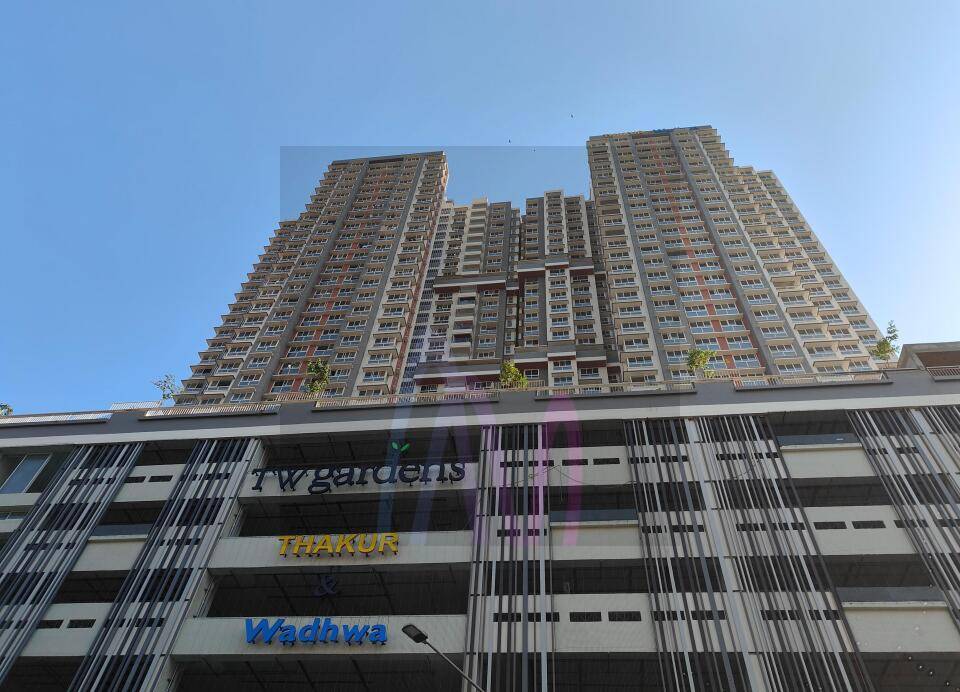
If you own a flat in an old Mumbai building, redevelopment may be the biggest property decision you make with your neighbours. You hand your home to a developer for a few years and wait for a bigger, better flat.
So imagine getting the keys and finding the flat is smaller than the agreement said, or the parking and amenities you were promised are missing. Where do you go then? A Bombay High Court ruling this week gives a clear, if slightly uncomfortable, answer, and I think every society member should understand it before signing anything.
What did the Bombay High Court decide this week?
As reported by the Free Press Journal on 28 October 2026, a bench of Justices Suman Shyam and Gautam Ankhad dismissed a writ petition filed by two members of Bhanujyoti Co-operative Housing Society in Malad (East). They owned two flats in the society and said, after redevelopment by Namo Realty Ventures LLP, that their carpet area was smaller than promised and that agreed amenities and car parking had not been provided. They asked the High Court, under Article 226 of the Constitution, for additional area and financial compensation.
The court agreed with the developer. It said the substance of what the members wanted was "additional area", that a writ of mandamus "would not lie against a private person" who is not discharging a public duty, and that writ jurisdiction cannot replace ordinary civil remedies in a private dispute. It found no public law element and no breach of statutory duty by the municipal authorities.
The report adds that 46 of the society's 48 members supported the project, the redevelopment is complete, and the other members have taken possession.
Why can't I just go to the High Court?
My reading of the ruling is simple: a writ is meant for public duties, like a government body failing to act. A developer building your new flat is a private party carrying out a private contract. If the contract was broken, the court is saying, use the remedies meant for contracts, not a writ. The petition was dismissed on that ground, so the court did not decide whether the members' complaints about area and parking were right or wrong.
I'd treat this as a signpost, not a closed door: your rights remain, but they run through your development agreement.
Can members of a redevelopment society file a MahaRERA complaint?
Many members assume that because the new building is registered with MahaRERA, they can complain there like any other buyer.
In May 2026, the Maharashtra Real Estate Appellate Tribunal said otherwise in Sudhir Vitthal Mulay v. Rui Universal Realties, as reported by LiveLaw Biz on 18 May 2026. The Tribunal held that RERA applies to the sale component of a redevelopment project, the flats the developer sells to new buyers. An existing member's rights come from the society's development agreement, not an agreement for sale, so the member was not an "allottee" under the Act. It said the development agreement "cannot be enforced under the provisions of RERA Act, 2016" and that any dispute arising from it "must be enforced either individually or through the Society".
Put the two rulings side by side and the picture is clear. For a rehab flat, neither a MahaRERA complaint nor a High Court writ is the usual answer. The development agreement is the document that matters, and it is enforced through ordinary legal remedies, by you or by your society. If you are buying one of the sale flats in the same building, your position is different, and I have written about that in buying a flat in a redevelopment project.
What is the 3% carpet area clause, and why should you care?
In a Consumer Connect column in the Free Press Journal in July 2026, advocate Shirish Deshpande, chairman of the Mumbai Grahak Panchayat, pointed out a gap. MahaRERA's model agreement for sale protects buyers of sale flats: the developer must reimburse even a 1 sq ft shortfall, with interest. But there is no model development agreement for societies, and some agreements include a clause that lets the developer off for any shortfall of up to 3% of carpet area, compensating only the part above 3%.
Here is what that means in plain numbers. Say your agreement promises a 500 sq ft carpet area flat:
- If the flat comes out 3% smaller, that is 15 sq ft short, and under such a clause you get nothing for it.
- If it comes out 5% smaller, that is 25 sq ft short, but only 10 sq ft (the 2% above the cushion) is compensated. The other 15 sq ft is simply gone.
In Mumbai, 15 sq ft is real money. The column's advice to societies is direct: refuse any clause that lets a developer escape liability for a shortage of up to 3%. It also says such a clause can be challenged as unfair, pointing to the Consumer Protection Act, 2019, which allows State and National Consumer Commissions to strike down unfair contract terms. But because a development agreement is negotiated, it stresses that the society should keep written evidence that it objected to the clause.
If carpet area itself feels confusing, my explainer on RERA carpet area vs built-up area is a good place to start.
What should you check in a development agreement before signing?
Drafting is your society lawyer's job, but these are the questions I would want answered in writing:
- Carpet area, flat by flat. Is each member's new carpet area stated clearly, using the RERA definition, not a loose "area" figure?
- The shortfall clause. Is there any cushion (like 3%) before compensation starts? If yes, has the society formally objected in writing?
- Amenities and parking. Are they listed specifically, with numbers, not described as "modern amenities"?
- Measurement at handover. Who measures the flat, and can members verify it before accepting possession?
Our redevelopment member checklist goes deeper into the earlier stages, and the TND RERA helpdesk is there if you want help reading project details.
In redevelopment, the agreement you sign today decides the flat you get years later, so read every square foot before you sign.
What this means for you
If you are an owner in a building heading for redevelopment
Your strongest moment is before the development agreement is signed, not after possession. Get involved in the society's meetings, ask for the draft agreement, and make sure objections to weak clauses are recorded in writing, in minutes or letters. If a dispute ever arises, that paper trail is what you and your society will rely on.
If you are an NRI owner
Redevelopment meetings, draft agreements and votes happen in Mumbai, often at short notice. If you are abroad, make sure someone you trust receives every society notice and can attend on your behalf with proper written authority. Missing the window to object, or to exercise an option for extra area, can cost you. In the Mulay case, the Tribunal also found the member had missed the deadline to exercise his option to buy additional area. Our NRI property management service exists for exactly this kind of distance problem.
If you have already received a smaller flat
Measure it, collect your development agreement, allotment papers and possession documents, and speak to a lawyer about the remedy that fits your agreement. Work with your society if other members are affected too, since the Tribunal specifically mentioned enforcement "through the Society". For the wider picture on where society disputes go, see society dispute forums in Maharashtra.
How we help
We are not lawyers, and we will always tell you when you need one. What we do is the steady, practical work around your flat: keeping your papers in order, tracking society notices, coordinating with developers on defects and repairs, and keeping a written trail of everything. Two of our published cases show what that looks like. For an NRI owner in Australia with two flats in Kanjurmarg East, recurring seepage, geyser and AC faults were handled by our vendors, every ticket was closed, and we kept a written trail with the developer for the seepage. In Andheri East, when monsoon water came in near a living-room window and the owners were not in Mumbai, we had the society complaint form signed remotely, arranged access for the developer's team, and the repair was finished in about six weeks. You can read more on our Owners Wall, and owners can follow documents and inspections in the TND app.
Frequently asked questions
Can I go to the Bombay High Court if my redevelopment flat is smaller than promised?
Usually not through a writ petition. In a ruling reported on 28 October 2026, the Bombay High Court said a writ does not lie against a private developer in a private dispute over flat area, and that members must use ordinary civil remedies instead.
Can I complain to MahaRERA about my rehab flat in a redevelopment?
In a May 2026 ruling, the Maharashtra Real Estate Appellate Tribunal held that RERA covers only the sale component of a redevelopment. Existing members get their rights from the development agreement, not an agreement for sale, so MahaRERA complaints about rehab flats were held not maintainable.
What is the 3% carpet area shortfall clause?
Some development agreements say the developer pays nothing for a shortfall of up to 3% of carpet area, and pays only for the part above 3%. So on a 5% shortfall, only 2% is compensated.
Can an unfair development agreement clause be challenged?
A Mumbai Grahak Panchayat column published in July 2026 says such clauses can be challenged as unfair, and points out that the Consumer Protection Act, 2019 lets State and National Consumer Commissions strike down unfair contract terms. Written proof that the society objected to the clause helps.
What should my society do before signing a development agreement?
Read the carpet area, amenity, parking and shortfall clauses line by line, push back on any clause that lets the developer escape a small shortfall, and keep written records of every objection and change you proposed.
Related reading
- Mumbai redevelopment: a member's checklist
- Self-redevelopment for Mumbai societies
- Mumbai society redevelopment rules: the 2026 GR
If your building is heading into redevelopment, or you have just received a flat that does not match the papers, I'm happy to talk it through. Book a video call with us or message me on WhatsApp. We'll help you get your documents in order and point you to the right professional when you need one.
Warmly,
Yanik
This is general information, not legal or financial advice. Please speak to a qualified lawyer about your own development agreement.
Own a flat in Mumbai while living abroad?
TND Listings manages, sells and helps you buy property across Mumbai, Navi Mumbai and Thane, with one point of contact.
TND Listings is a professional real estate brokerage company serving buyers, sellers, NRIs and Private Institutes. At TND Listings, you are number one. We believe in integrity, commitment to excellence, a professional attitude, and personalised care.
→
Off Veera Desai Road, Andheri West,
Mumbai, Maharashtra 400053 +91 88504 51835
Prabhadevi, Mumbai,
Maharashtra 400025 +91 8850451835
Shakespeare Sarani, Kolkata,
West Bengal 700017 +91 88504 51835
Thakur Village, Kandivali East,
Mumbai, Maharashtra 400101 +91 88504 51835
CIN: U68100MH2025PTC448661
© 2020 – 2026 TND Listings Private Limited, operating under the brands TND Listings and The New Door · CIN U68100MH2025PTC448661 · MahaRERA Agent Reg. No. A51800024511