
When the Builder Is Replaced, Who Owes You Your Money? What the Bombay High Court Just Said
A new developer is not liable for the old builder's refund, says the Bombay High Court. What this Mumbai ruling means for buyers in redevelopment projects.
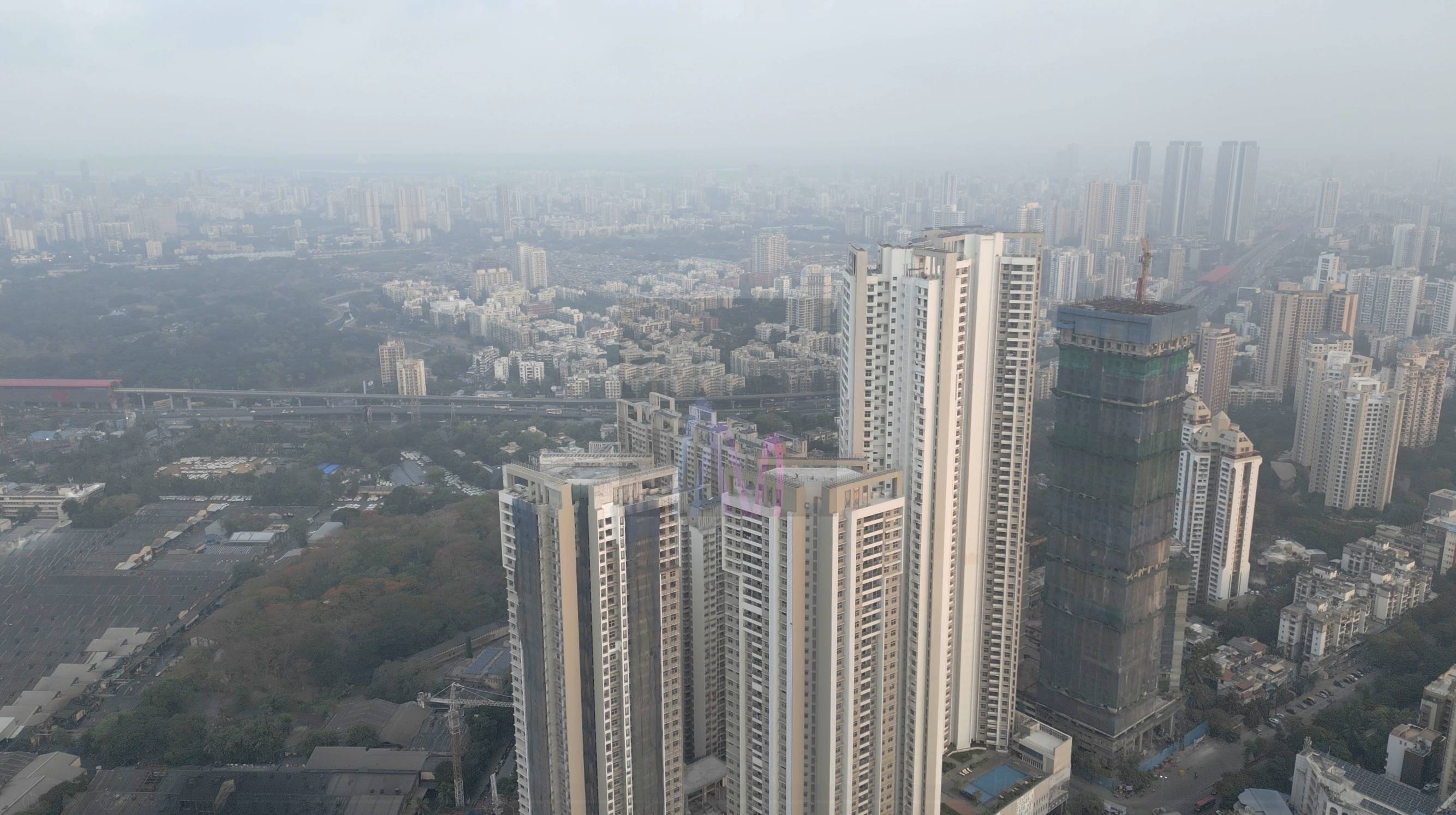
Imagine you paid a builder for a flat in a redevelopment project. A few years later the builder is gone, a new developer has taken over, and the building is finally coming up. It feels natural to think the new developer now owes you, too. A ruling from the Bombay High Court this week says it is not that simple.
I want to walk you through what happened, because the same situation can touch anyone buying in a redevelopment project, whether in Kandivali, Andheri or anywhere else in the city.
What did the Bombay High Court decide?
According to LawChakra's report of the judgment, a bench of Justices Suman Shyam and Gautam A. Ankhad delivered the ruling on 5 November 2026 in H. Rishabraj Developers v. State of Maharashtra and Others. The court allowed both of the developer's petitions and set aside a MahaRERA order, so far as it operated against the new developer.
As the Free Press Journal reports, the case came from a Kandivali redevelopment on land belonging to a trust, the Khambhati Modh Vanik Samaj. The trust had appointed Jayant Mehta as the original developer. In 2015 he allotted a ninth-floor flat to a couple, who paid Rs 37 lakh. The development agreement was terminated in July 2017, and H. Rishabraj Developers was appointed as the new developer in July 2021, following High Court proceedings.
The couple went to MahaRERA. LawChakra reports that in May 2018 the complaint was disposed of on Mehta's undertaking to refund the principal on a schedule, but repeated defaults followed. In March 2022 MahaRERA directed both Mehta and the new developer to pay interest on the Rs 37 lakh from 17 May 2018, and recovery steps led to the new developer's bank accounts being attached. The High Court has now quashed that liability, and the attachment, against the new developer.
Why was the new developer not held liable?
From the two reports, the court's reasoning comes down to a few plain points:
- It was never made a party. The new developer was not named in the original complaint, the review and execution application, the appeal or the remanded hearing. Being called to a hearing was not enough.
- It never got the money. The Rs 37 lakh stayed with the earlier developer. The interest period began more than three years before the new developer entered the project.
- It did not take over the debt. Its rights came from a fresh, court-sanctioned agreement with the trust, not a transfer from the earlier developer, and MahaRERA's registration order for it had excluded past liabilities. In the court's words, as LawChakra quotes it, "Knowledge of another person's liability does not amount to taking over of that liability."
The Free Press Journal also quotes the court saying that a default by the previous developer "cannot be retrospectively transferred to a third party."
Does this mean the buyers lose their money?
No, and this is the part I would underline. Both reports say the ruling does not let the earlier developer off. The couple can still pursue Mehta for their dues, and the trust if that is legally maintainable. LawChakra also notes that the judgment is not a blanket exemption for every replacement developer. It turns on these facts.
My reading is that the ruling is less about who wins and more about where the debt sits. Your claim follows the person who took your money and made you the promise. A new name on the hoarding does not quietly inherit it.
Is a redevelopment flat riskier to buy after this ruling?
I would not treat it as a reason to avoid redevelopment. Mumbai is rebuilding itself through these projects. I would treat it as a reason to do your homework on the developer's history before you pay, not after. We have written about what happens when timelines slip in our note on redevelopment delays.
Here is a real example from our own files of why the paper trail matters. On a resale flat in Kandivali East, the buyer's bank found an old agreement on the flat that had since been cancelled and paused the loan. We put together the cancellation papers the bank asked for and kept the buyer, the seller and the bank moving on one timeline. Old paperwork does not disappear on its own. Someone has to close it properly.
What should you check before paying a developer in Mumbai?
- The MahaRERA registration. Confirm the promoter named on the registration is the company you are paying. Our RERA-verified projects page and RERA helpdesk can help you start.
- The development agreement. Ask who signed with the society or landowner, and when. If there was an earlier developer, ask how that agreement ended and whether any court case is pending.
- Where your money goes. Pay only to the account named in your registered agreement, and keep every receipt.
- A registered agreement. A letter of allotment is not the same protection as a registered agreement for sale.
Your money is owed by the person you paid, so make sure that person is someone you can still find in ten years.
What this means for you
If you are a buyer
Before you book in a redevelopment or a stalled project, find out whether the current developer is the first one on the plot. If not, ask what happened to the earlier buyers. Our buyer's tool hub is a good place to start your shortlist, and a property valuation helps you see whether the price makes sense for the risk.
If you are an NRI buying from abroad
Distance makes it harder to follow a developer's story over years. I'd treat a change of developer as a moment to pause and ask questions in writing. Our NRI buy and sell desk works for owners who cannot be in Mumbai for every meeting.
If you already have money stuck with a removed developer
Do not assume the new developer will settle it. Keep your payment records together, note who received each payment, and get legal advice on who should be named in any complaint. Our posts on filing a MahaRERA complaint and enforcing a MahaRERA order explain the steps.
How we help
At TND Listings, our team has 17 years of on-ground experience in Mumbai resale, rentals and NRI advisory, with offices in Andheri West, Prabhadevi and Kandivali East. When you are buying, we help you gather the documents, check the paper trail and keep everyone on one timeline. For a flat that is ready, we also handle possession and follow-up with the developer. For one NRI owner in the Gulf who took possession of a new Kandivali East flat from abroad, we worked under his written authorisation to get the developer to fix snag-list defects, ran the fit-out and booked a tenant about 12 weeks after key handover. You can browse homes on our live listings, including 2 and 3 BHK flats in Kandivali.

Frequently asked questions
If my builder is replaced, does the new developer have to refund my money?
Not automatically. In this Bombay High Court ruling, the new developer was not held liable for a refund the earlier developer owed, because it was not a party to the case, received none of the money and did not take over that debt. Each case turns on its own facts and documents.
Who can I recover my money from if the original developer was removed?
In this case the court said the buyers could still pursue the earlier developer, and the landowning trust if that is legally maintainable. Your own options depend on your agreement, who received your payments and what the new development agreement says.
Should I join the new developer in my MahaRERA complaint?
The court set aside the order against the new developer partly because it was never made a party to the complaint or the later proceedings. If you believe a new developer is responsible, speak to a lawyer early about who should be named and on what basis.
How do I check a redevelopment project before I book a flat?
Check the MahaRERA registration and its promoter details, who signed the development agreement with the society or landowner, and whether there has been any earlier developer, termination or court case on the plot. Pay only to the account named in the registered agreement.
Related reading
- Buying a Flat in a Redevelopment Project
- Cancelled a Flat Booking? MahaRERA's 2% Cap
- Checking a Resale Flat's Title Chain
If you are looking at a project where the developer has changed, or you have money stuck with one who has gone quiet, I'd be glad to talk it through. Book a video call through our contact page, or simply message us on WhatsApp. Bring your agreement and receipts, and we will look at them together.
Warmly,
Yanik
This is general information, not legal or financial advice. Please speak to a qualified lawyer about your own case.
Own a flat in Mumbai while living abroad?
TND Listings manages, sells and helps you buy property across Mumbai, Navi Mumbai and Thane, with one point of contact.
TND Listings is a professional real estate brokerage company serving buyers, sellers, NRIs and Private Institutes. At TND Listings, you are number one. We believe in integrity, commitment to excellence, a professional attitude, and personalised care.
→
Off Veera Desai Road, Andheri West,
Mumbai, Maharashtra 400053 +91 88504 51835
Prabhadevi, Mumbai,
Maharashtra 400025 +91 8850451835
Shakespeare Sarani, Kolkata,
West Bengal 700017 +91 88504 51835
Thakur Village, Kandivali East,
Mumbai, Maharashtra 400101 +91 88504 51835
CIN: U68100MH2025PTC448661
© 2020 – 2026 TND Listings Private Limited, operating under the brands TND Listings and The New Door · CIN U68100MH2025PTC448661 · MahaRERA Agent Reg. No. A51800024511