
Your Tenant Didn't Deduct TDS on Rent to an NRI Landlord. Here's How to Fix It Before It Grows
If a tenant paid an NRI landlord full rent without TDS, the default sits with the tenant and grows each month. The interest, fees, and the steps to put it right.

It's one of the most common problems with NRI-owned flats: the tenant pays the full rent every month, nobody deducts TDS, and a year later someone notices. The good news is it can be fixed. The bad news is that it gets more expensive every month it waits.
Who is liable if TDS on NRI rent wasn't deducted?
The tenant. When the landlord is a non-resident, TDS applies from the first rupee of rent, with no Rs 50,000 threshold, and the person paying the rent must deduct it. If they don't, the tax, interest and fees are theirs. Our post on TDS on rent to an NRI landlord covers the rules in full.
What interest and penalties apply?
- Interest for not deducting: 1% a month on the tax.
- Interest for late deposit: 1.5% a month from deduction to deposit.
- Late filing fee: Rs 200 a day under section 427 (formerly 234E), capped at the TDS amount.
- Penalty: Rs 10,000 to Rs 1,00,000 where the statement isn't filed within a month of the due date.
How much can it add up to?
On rent of Rs 1,00,000 a month, TDS at 31.2% is Rs 31,200 a month. Missed for 12 months, that's over Rs 3.7 lakh of tax the tenant should have deducted, before interest and fees. That's why it's worth fixing now.
A missed TDS is a problem for the tenant and a headache for the owner. Fix it together, quickly, and keep the relationship.
How to fix missed TDS on NRI rent: step by step
- Stop the problem going forward. From next month, the tenant deducts TDS on every payment.
- Get a TAN. Rent to an NRI still needs the tenant's TAN; the October 2026 no-TAN route is only for buying property from an NRI.
- Work out the past TDS month by month, with interest.
- Agree who bears the cost. Legally, it's the tenant's liability. In practice, if the tenant has already paid the full rent to you, owner and tenant often agree that the owner refunds the TDS portion so the tenant can deposit it. Put any arrangement in writing.
- Deposit the tax with interest and file the quarterly Form 144 statements (formerly Form 27Q) for the missed quarters.
- Issue Form 131 certificates to the landlord.
- Landlord: check Form 168 and AIS so the credit shows against your PAN, and claim it in your return.
How to make sure it doesn't happen again
- Put the landlord's residential status and the TDS obligation in the leave and licence agreement.
- If the TDS is too high for your real tax, apply for a Form 128 lower deduction certificate.
- Use a quarterly checklist; ours is in the NRI landlord TDS checklist.
How we help
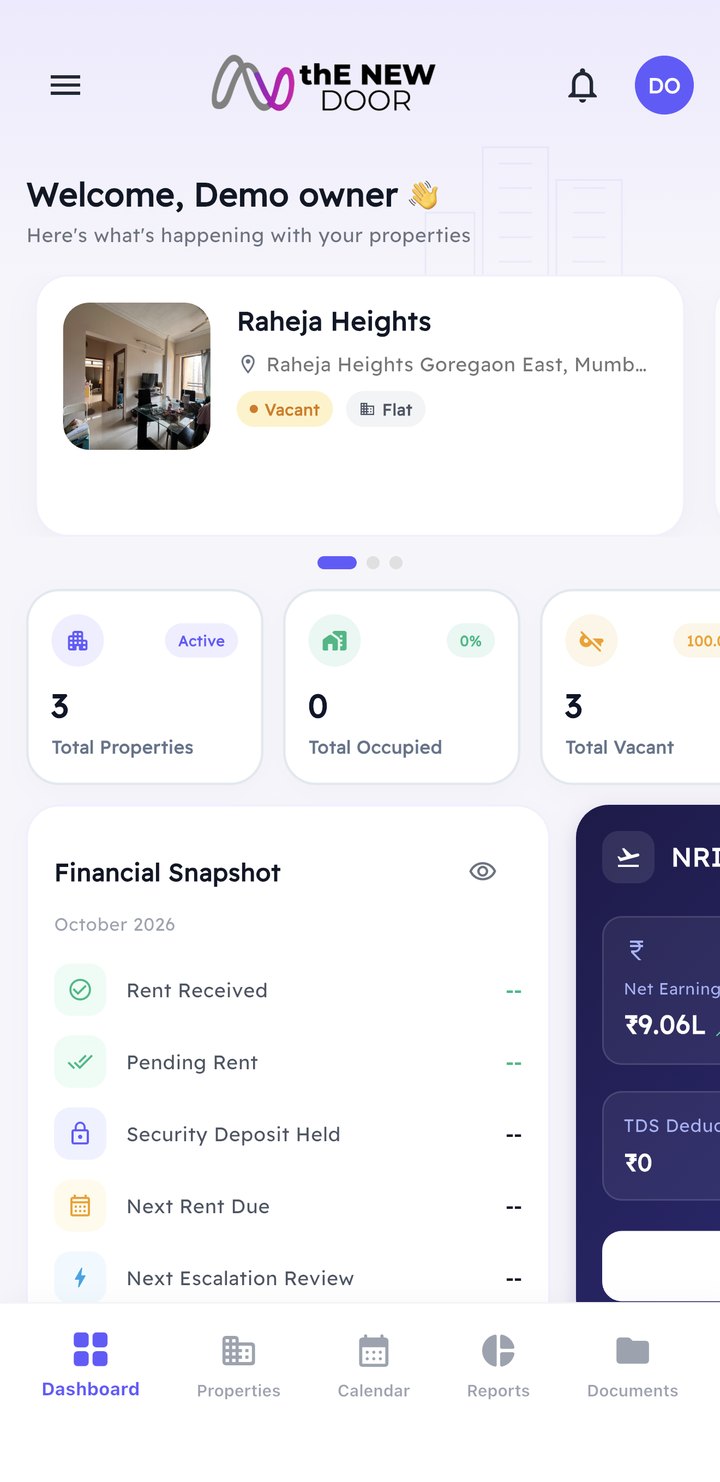
For flats we manage, the TND app tracks rent and TDS month by month, so a missing deduction shows up early. Tenants pay rent directly to the owner; we track it and follow up on certificates. See NRI property management.
Frequently asked questions
Who pays if TDS on rent to an NRI was not deducted?
The tenant is liable for the tax, interest of 1% to 1.5% a month, late filing fees and possible penalties.
Can a tenant fix missed TDS on NRI rent?
Yes. Get a TAN, deposit the tax with interest, file the missed Form 144 statements and issue Form 131 certificates.
Does the October 2026 no-TAN rule apply to rent?
No. It applies to resident individuals and HUFs buying property from a non-resident, not to rent.
Related reading
- When rent TDS doesn't match your tax statement
- Does DTAA reduce TDS on rent?
- Filing a return and claiming a refund
Found a TDS gap on your flat? Book a video call or WhatsApp me.
Warmly,
Yanik
General information, not tax advice. Please work through the correction with a chartered accountant.
Own a flat in Mumbai while living abroad?
TND Listings manages, sells and helps you buy property across Mumbai, Navi Mumbai and Thane, with one point of contact.
TND Listings is a professional real estate brokerage company serving buyers, sellers, NRIs and Private Institutes. At TND Listings, you are number one. We believe in integrity, commitment to excellence, a professional attitude, and personalised care.
→
Off Veera Desai Road, Andheri West,
Mumbai, Maharashtra 400053 +91 88504 51835
Prabhadevi, Mumbai,
Maharashtra 400025 +91 8850451835
Shakespeare Sarani, Kolkata,
West Bengal 700017 +91 88504 51835
Thakur Village, Kandivali East,
Mumbai, Maharashtra 400101 +91 88504 51835
CIN: U68100MH2025PTC448661
© 2020 – 2026 TND Listings Private Limited, operating under the brands TND Listings and The New Door · CIN U68100MH2025PTC448661 · MahaRERA Agent Reg. No. A51800024511